


Choosing your usual football shirt size and ordering the same size in rugby is the surest way to get it wrong. The two garments have different cuts, knits and functions. A rugby jersey is designed to withstand being gripped, which means denser fabric, reinforced seams, shorter sleeves and a shape that fits the body more closely.
In practice, many fans end up with a jersey that’s tight around the armholes even though the chest measurement seemed right, or, conversely, with a loose-fitting garment that loses all its character. This guide uses the actual measurements of the rugby jerseys in the catalog, explains how to read them and gives the most reliable method: compare with a garment you already own.
The chest measurements given for a rugby jersey are measured flat, from underarm to underarm. So a S listed as 52 cm corresponds to a garment chest measurement of 104 cm.
Allow about 8 to 12 cm of ease compared with your chest measurement for a comfortable fit. For a close, match-style fit, reduce this allowance. If you’re between sizes, choose the larger one if you’ll wear a layer underneath.
Why a rugby jersey doesn’t fit like a football shirt
A modern football shirt is designed to be lightweight and wick away sweat. A rugby jersey is designed first and foremost to hold up. It has to withstand tackles, hands gripping the fabric, scrums and repeated contact. This means a tighter knit, sometimes with a little stretch, reinforced panels and a collar that is often more structured.
- Lightweight, breathable, very flexible knit.
- Loose fit in the fan version, fitted in the player version.
- Longer sleeves, wider armholes.
- Longer length, often worn untucked.
- Dense, tear-resistant knit.
- Close-fitting cut to limit opponents’ grip.
- Significantly shorter sleeves, tight armholes.
- Shorter length, designed to be tucked into shorts.
Direct result: for the same size, a rugby jersey looks smaller than a football shirt. This isn’t a manufacturing defect; it’s the very nature of the garment. If you’re looking for a relaxed fit for the city, you’ll often need to go up a size from your usual.
Actual measurements, size by size
Here is the store's official rugby jersey size chart. Three columns to understand: chest is measured flat from one armhole seam to the other, length from the top of the shoulder to the bottom of the jersey, and sleeve length from the shoulder seam to the cuff.
| Size | Chest laid flat | Jersey chest circumference | Length | Sleeves |
|---|---|---|---|---|
| S | 52 cm | 104 cm | 71 cm | 36.5 cm |
| M | 54 cm | 108 cm | 73 cm | 38.5 cm |
| L | 56 cm | 112 cm | 75 cm | 40.5 cm |
| XL | 58 cm | 116 cm | 77 cm | 42.5 cm |
| 2XL | 60 cm | 120 cm | 79 cm | 44.5 cm |
| 3XL | 62 cm | 124 cm | 81 cm | 46.5 cm |
The “jersey chest circumference” column is not on the label: it is simply the flat measurement multiplied by two. Use it to compare with your own chest circumference, measured at the fullest point with your arms at your sides. L's difference between the two figures corresponds to the ease, or wearing comfort.
L's increase between sizes is consistent: two centimeters laid flat, or four centimeters in circumference. The increases in length and sleeve length follow the same pattern. This consistency is useful because it lets you know exactly what you gain by going up a size, without having to rely on guesswork. You can consult the chart at any time on the store's rugby size guide page.
Find your size based on chest circumference
Measure your chest circumference with a flexible tape measure, under your armpits, without pulling it tight or expanding your chest. Then select the corresponding range. The measurements below are based on the official chart measurements, with the usual ease added for wearing a rugby jersey without a thick layer underneath.
Jersey with a 104 cm chest circumference, 71 cm length, and 36.5 cm sleeve length. If you prefer a relaxed fit for everyday wear, go up to M.
Jersey with a 108 cm chest circumference, 73 cm length, and 38.5 cm sleeve length. This is the most common size among adult supporters.
Jersey with a 112 cm chest circumference, 75 cm length, and 40.5 cm sleeve length. A good compromise if you have broad shoulders relative to your chest.
Jersey measuring 116 cm around the chest, 77 cm long, with 42.5 cm sleeves. Be sure to check the length if you're over 1.90 m tall.
Jersey measuring 120 cm around the chest, 79 cm long, with 44.5 cm sleeves. It remains comfortable even with a thin layer underneath.
Jersey measuring 124 cm around the chest, 81 cm long, with 46.5 cm sleeves. This is the largest size available in the rugby range.
Select a range above to display the corresponding size.
In rugby, tightness is rarely an issue around the stomach; it's usually at the armholes. If you have muscular arms, go up a size even if your chest measurement matches the chart exactly. Short sleeves can quickly feel tight around the biceps.
The most reliable method: compare it with a jersey you own
Body measurements give you an estimate. Comparing with an actual garment gives you certainty. Take a jersey that fits you well, lay it flat on a table, and note down three measurements. You can then compare them directly with the chart, without having to interpret anything.
Measure from one armhole seam to the other, with the jersey laid flat and without pulling the fabric. Compare this measurement with the “chest width, laid flat” column.
From the highest point of the shoulder to the bottom of the jersey. A difference of two centimeters is imperceptible; four centimeters is clearly visible.
From the shoulder seam to the cuff. This is what surprises people most when switching from football, as the difference can exceed five centimeters.
If the jersey you're measuring is a football jersey, remember to adjust your comparison: with the same chest width, a rugby jersey will feel more fitted because its knit is less flexible. If in doubt, sizing up is the most comfortable choice.
Choose based on how you'll wear the jersey
Three uses, three ways to choose. A jersey worn on the pitch, in the stands, or around town calls for different compromises. Compare the three cases below before choosing your size.
Aim for a close fit. The jersey should follow your body without giving your opponent anything to grab, and stay tucked into your shorts throughout the match.
- Choose the size that fits your chest measurement exactly.
- Make sure you can raise your arms without the hem riding up.
- Don't size up: loose fabric is easy to grab.
You'll be standing still in the cold, often with a technical base layer underneath. L’ease becomes a comfort factor, not a drawback.
- Allow for 8 to 12 cm of ease compared with your chest measurement.
- If you wear a thick base layer, go up a size.
- Check the length: 75 cm or more remains comfortable when sitting.
Here, the jersey becomes a wardrobe staple. Rugby's shorter cut works very well, as long as you embrace a structured look rather than a loose one.
- Going up a size gives a more relaxed look.
- Watch the length: it's shorter than a football jersey.
- Polo-collar styles work better worn over a shirt.
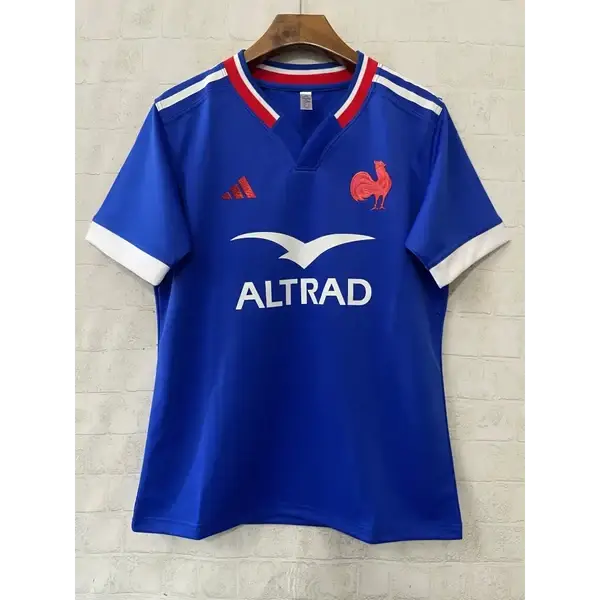
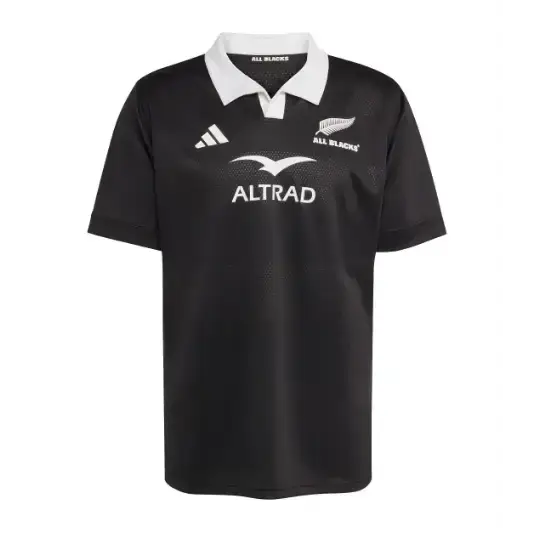
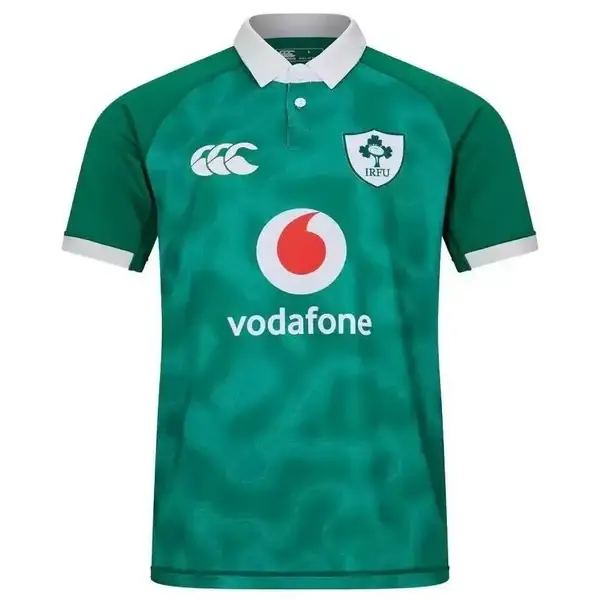
Three rugby jerseys available, sizes S to 3XL depending on the model.
The most common mistakes
The first is ordering the size shown on the label of your favorite T-shirt. Fits vary so much from one brand and sport to another that this information is almost useless. The second is forgetting about the layer worn underneath: a jersey chosen to fit just right becomes uncomfortable as soon as the first chilly evening.
Don't rely on the photo to judge the fit. A jersey photographed on a model or shown laid flat says nothing about how it will sit on your shoulders. Only measurements compared with a real garment give a reliable answer.
- Choose based on how the professional player looks. Match kits are often custom-made and much tighter than the versions available to the public.
- Ignore sleeve length. It varies the most between football and rugby and is the measurement people pay the least attention to.
- Thinking the jersey will stretch. Dense fabric changes very little in a 30-degree wash. Don't count on it getting bigger.
- Forgetting the collar's role. A stiff polo collar feels tighter than a crew neck in the same size.
One last point specific to this sport: don't look for a name print in your size. Rugby jerseys traditionally don't have one, and we explain why rugby jerseys don't have names on the back in a dedicated article. This changes how you think about your purchase: it's the fit, not the print, that makes the jersey.
Frequently asked questions
Yes, in most cases. The fabric is denser and the fit is closer to the body, with significantly shorter armholes and sleeves. At the same chest measurement, it looks more fitted.
This is the width of the jersey laid flat, measured under the armpits. Multiply by two to get the garment's chest measurement: 108 cm for an M in the rugby range.
If you plan to wear a thermal base layer in the stands, yes. If you'll wear the jersey over just a T-shirt or against your skin, stick with your usual size to keep the garment's shape.
Very little at 30 degrees, on a gentle cycle. Any changes are mainly due to drying: avoid the tumble dryer, which can shorten the garment and wear out the reinforced seams.
The rugby range starts at adult S, with a 104 cm chest measurement. For a child, it's better to choose a classic children's outfit, with sizes 16 to 28 based on height.
A size to check, not guess
Choosing a rugby jersey size is simple once you understand the measurements: a flat width, a factor of two, and room to move based on how you'll wear it. Two minutes with a tape measure is better than estimating based on another brand or another sport.
If you're still hesitating between two rows in the size chart, ask yourself one question: will this jersey be worn on the field or in the stands? The answer almost always settles it and saves you the hassle of a return. The store's rugby selection shows the available sizes on each product page.