


The first cold evening of the season always triggers the same bad calculation: you add a thick sweatshirt under the jersey, the collar disappears, the sleeves pull, and the lettering ends up stretched across a back that has become too wide. The problem is not a lack of warmth. It is the order of the layers. A football jersey is a lightweight layer designed to wick moisture and display the colors; it cannot become a jacket simply because the temperature drops.
The solution comes down to three functions: a thin layer against the skin to manage sweat, the jersey for identity, then an outer layer for protection from the wind or while waiting. Their thickness varies depending on whether you are playing, sitting in the stands, or walking around the city. Here is how to keep the jersey visible without distorting it, follow the rules on the pitch, and dry it without damaging the fabric or the lettering.
How many layers depending on the temperature?
The displayed temperature is not enough. Wind, rain, humidity, exercise intensity, and time spent standing still completely change how it feels. A player who keeps running at 5 °C may be too hot in a jacket; a supporter sitting at 10 °C for two hours may be cold in exactly the same outfit.
These temperature ranges are guidelines, not medical advice. Someone sensitive to the cold, a child, or anyone who remains still will need more protection. Conversely, layering up too early causes heavy sweating; as soon as the pace drops, moisture cools the body. The right outfit is one that can be adjusted easily by opening or removing the outer layer.
Compression base layer or thermal base layer?
The two terms are often confused. A compression layer is very snug and is mainly intended to provide support, limit chafing, and manage moisture. A thermal layer can fit closely without compressing strongly; its knit and lightly brushed inner surface retain more air. In cold weather, insulation and moisture wicking matter more than the pressure exerted on the body.
- Very close-fitting and almost invisible under the jersey
- Good sweat management during intense exertion
- Little insulation when remaining still
- Choose one without underarm discomfort or restricted breathing
- More insulating fabric, sometimes brushed on the inside
- Suitable for cold sessions and intermittent exertion
- Must remain thin so it does not stretch the jersey
- Synthetic fabric or fine wool manages moisture better than cotton
What fits under a jersey without distorting it
The ideal base layer is smooth, close-fitting and without a hood, pocket or thick seam. Its collar should remain below the jersey’s collar or form a deliberate, clean line. Its sleeves should not create a bulge at the armhole. If the jersey rides up over the stomach, the lettering looks stretched or the shoulder seams move backward, the inner layer is too thick or the jersey is too fitted for this combination.
A player version leaves less room than a fan version. To wear it in winter, you do not necessarily need to change your entire wardrobe: reserve it for a very thin base layer and place the insulation above it, with an open jacket or tracksuit. Buying a jersey two sizes larger solely to fit a sweatshirt underneath rarely gives a satisfactory silhouette for the rest of the year.
Put on all the layers, cross your arms and lean forward slightly. The number should remain flat, without whitening at the edges or forming very taut horizontal creases. If it already pulls when cold, movement and body heat will increase the strain.
The three-layer method
A thin synthetic or technical wool base layer wicks away moisture. It should fit closely without restricting breathing, riding up or rubbing. Avoid a cotton T-shirt during exertion: it absorbs moisture, becomes heavier and retains dampness when you stop.
The jersey remains visible and works as a light layer. It does not need to be compressed between two thick garments. Leave it enough room so the fabric does not cling completely to the base layer and the lettering remains relaxed.
A tracksuit jacket, windbreaker or parka, depending on the conditions, protects the warmth already created. A zipped outer layer is preferable: you can open it while walking, close it when standing still and show off the jersey without having to take everything off.
This method is modular. At training, the third layer mainly serves before the session and during breaks. In the stands, it remains on for almost the entire match. In the city, it can be chosen roomier to keep the jersey visible when open. The logic remains the same, but the proportion of the three functions changes.
Field, stands, and city: three different kinds of cold
In the stands: dress for the wait, not just the photo
The journey, the entrance line, halftime, and the trip home are often colder than the match. A packable parka or a tracksuit jacket under a coat gives you more room than an oversized sweatshirt worn under the jersey. Add a hat, gloves, and warm socks before adding even more bulk to your torso: exposed extremities quickly reduce overall comfort.
If you want to show the colors, open your jacket while moving around or at kickoff, then close it as soon as you get cold. No terrace style is worth staying wet or shivering for two hours. The jersey can also be worn over a thin fleece if its cut allows it, but check that it is neither rare nor fragile: repeated rubbing against zippers and a bag can damage old lettering.
In the city: playing with volume
A fitted contemporary jersey works well over a black, white, or tone-on-tone long-sleeve shirt, then under an open jacket. A loose retro jersey can handle a slightly more substantial inner layer, but calls for cleaner bottoms to avoid the “everything is too big” effect. A tracksuit creates the most natural connection because its fabrics and finishes belong to the same sporting world.
Avoid thick sweatshirt collars that stick out on every side and push the jersey collar upward. If you insist on wearing a hood, wear the hoodie over the jersey or choose a jacket whose opening still reveals part of the chest. The point is not to follow a fashion rule, but to avoid forcing the garment into a construction it was not cut for.
On the field, the base-layer color is regulated
The Laws of the Game provide that a visible undershirt must either be a single color identical to the primary color of the sleeves, or feature a pattern and colors that exactly reproduce the sleeves. A black base layer under red sleeves may therefore be practical during informal training, but rejected in an official competition.
The same principle applies below the waist: the compression shorts or tights must match the dominant color of the shorts or their lower section, and players on the same team must use the same color. Gloves, soft protective equipment, and headwear may be allowed if they are not dangerous, but the competition regulations and the referee's inspection remain decisive.
| Item | Expected color | Good example | Avoid |
|---|---|---|---|
| Base layer | The sleeve's primary color or an identical pattern | Blue sleeves, blue base layer | White sleeves, visible black base layer |
| Compression shorts / tights | The dominant color of the shorts or their lower section | Black shorts, black tights | Each player with a different color |
| Tape on socks | The same color as the covered area | White tape on a white sock | Highly contrasting black tape |
| Headwear | Black or the jersey's primary color, depending on the expected conditions | Soft and safe technical hat | Rigid accessory or one attached to the jersey |
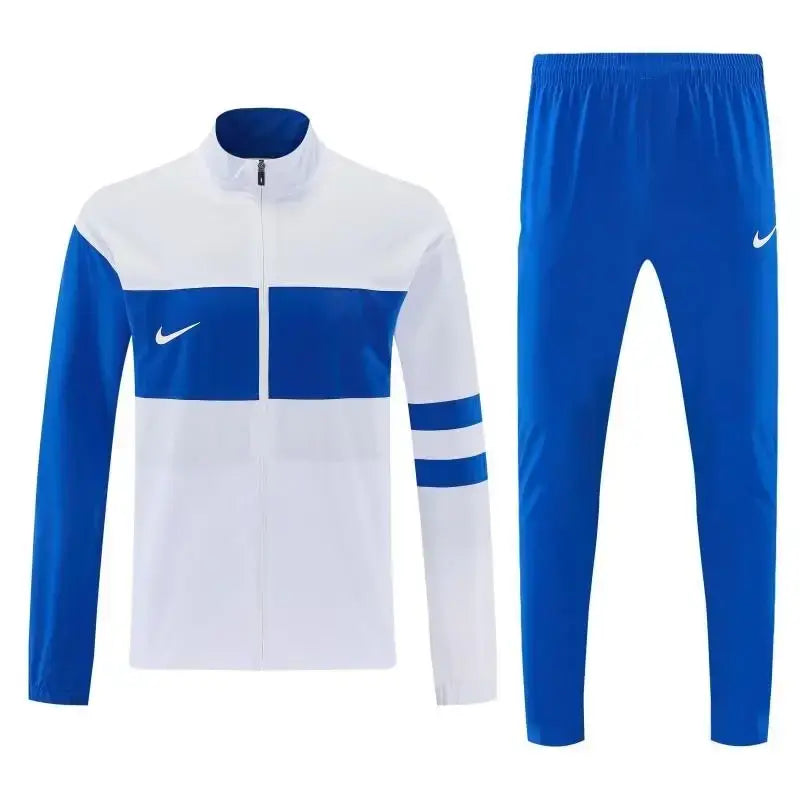
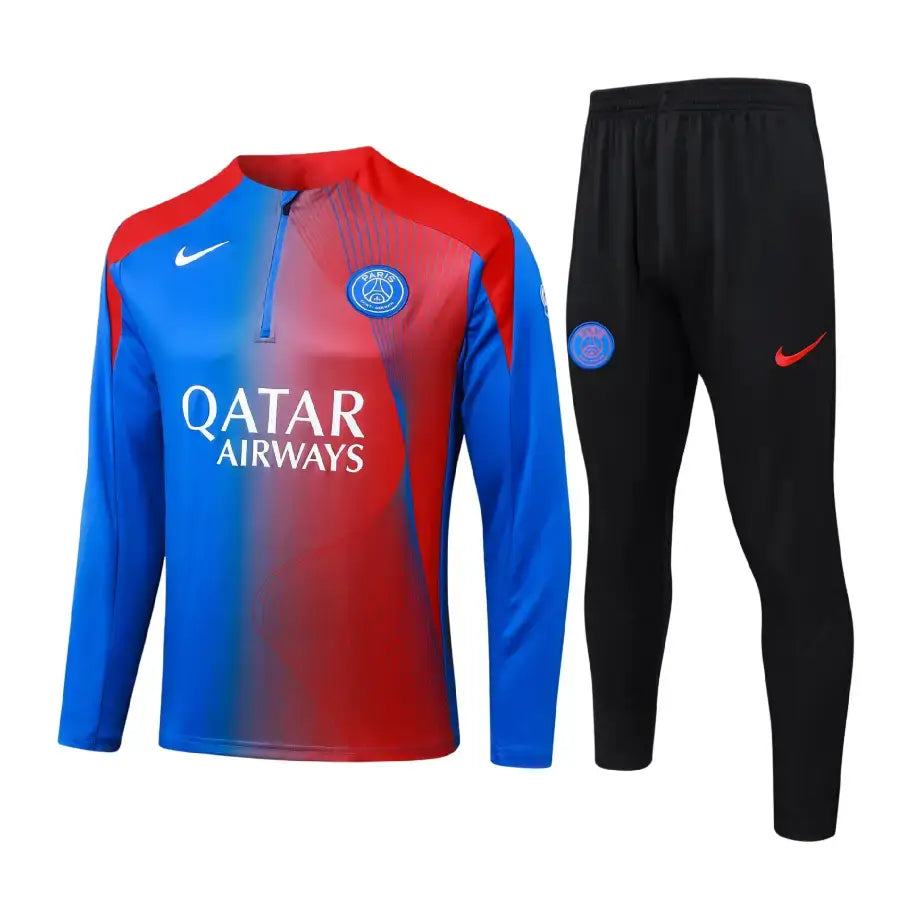
Jacket or tracksuit: the simplest outer layer
The tracksuit solves two problems at once: it blocks some of the wind while remaining coordinated with the jersey even when it covers it. For an adult, a slightly fitted cut is sufficient if it is worn mainly for warm-ups; choose a looser fit if it needs to go over a jersey and a base layer all day. For a child, focus mainly on sleeve length, ease of using the zip, and room in the shoulders.
Mistakes that damage the jersey or ruin layering
Cut off the sleeves to turn it into a tank top
A sleeve is not an inconsequential extra piece. Its seam helps support the shoulder and distribute tension. Cutting it off leaves knit fabric that can run, deforms the armhole, and makes the garment non-compliant for a match, since the required equipment includes a jersey with sleeves. If you are too hot, choose a more breathable model or remove a layer.
Wear a thick sweatshirt under a fitted jersey
The sweatshirt pushes against the collar, restricts the shoulders, and puts tension on the heat-applied areas. The damage may not appear the first evening, but repeated stretching weakens the corners of the number and the small sponsor logos. Instead, place the sweatshirt or jacket on top, or reserve this layering for loose jerseys without delicate lettering and logos.
Keep the layers damp after exercise
Rolling the jersey and base layer together in the bag traps sweat, heat, and odors. Colors can transfer, odor-causing bacteria remain in the fibers, and the lettering and logos can sometimes stick to the neighboring fabric. As soon as the session ends, separate the pieces and let them air out before washing.
Dry it on a radiator
Direct heat does not “dry better.” It concentrates high heat on a small area, hardens the adhesives used for the lettering and logos, can make polyester shiny, and deform elastic fibers. A tumble dryer creates the same risk on a larger scale. A technical jersey dries naturally quickly; it mainly needs air.
Do not wring the jersey by twisting it, and do not place it on a heat source. Press it in a clean towel, reshape it, then hang it on a wide drying rack in the open air, away from the radiator and direct sunlight.
Wash and dry multiple layers without mixing them
The base layer absorbs most of the sweat; the jacket collects more dust and friction; the jersey has the most delicate heat-applied lettering and logos. Washing them all together every time is therefore not ideal. Close the jacket zippers so they do not catch on the knit, turn the jersey inside out, and use a gentle 30 °C cycle. Avoid fabric softener, which can leave a film on technical fabrics and reduce their ability to wick away moisture.
If the jersey is personalized, find the complete care instructions in our guide to washing a printed jersey without peeling off the number. The general rule remains simple: less heat, less friction, and more air.
Frequently asked questions
Yes for calm city wear, as long as the fit remains comfortable. For playing or walking for a long time, cotton retains moisture and cools down when activity decreases; a thin technical base layer is better suited.
Not if you use a genuine thin base layer. Choose a roomier fit only if you know the jersey will often be worn over a fleece or sweatshirt. For an already very fitted player version, however, the next size up may be more comfortable year-round.
For competition, it must exactly match the pattern and colors of the sleeves, or be a solid color matching their main color. For casual wear, choose the dominant color of the jersey: it makes the transition at the collar and cuffs more subtle.
It keeps out the rain and often the wind, but provides little insulation if it is very thin. Its effectiveness comes from the warmth retained by the layers underneath. In the stands, add an insulating layer; during activity, watch for moisture buildup above all.
Avoid rough linings, bags that rub directly against the back, and metal zippers that come into contact with it. Wear the jacket slightly loose, open it carefully, and save the most delicate jerseys for dry days or indoor use.
Staying warm without hiding the jersey
Cold weather does not condemn the jersey to the back of the wardrobe. It simply requires restoring its true function: a light, visible layer placed between what keeps the skin dry and what blocks the wind. A thin base layer, a relaxed-fitting jersey, and a zip-up jacket are enough in most situations.
Then adapt the system to your inactivity, not your courage. You can open a jacket to show your colors; you cannot easily get back an evening spent shivering or a print hardened on a radiator. The best layering system is adjustable, breathable, and gentle enough for the jersey to come out in spring exactly as it was in September.