


Why the 90s Changed Everything for Football Jerseys
The new sublimation printing technique allows complex patterns impossible to produce with screen printing. Clubs immediately took advantage.
Advertising logos on jerseys forced manufacturers to rethink the overall design to incorporate these new color zones.
The 1994 World Cup in the United States exposed African and Asian teams to the global market. Their bold jerseys made a splash.
Hip-hop culture adopts the football jersey as a fashion piece. Equipment manufacturers begin to design for the street as much as for the field.
The Jerseys That Defined the Decade
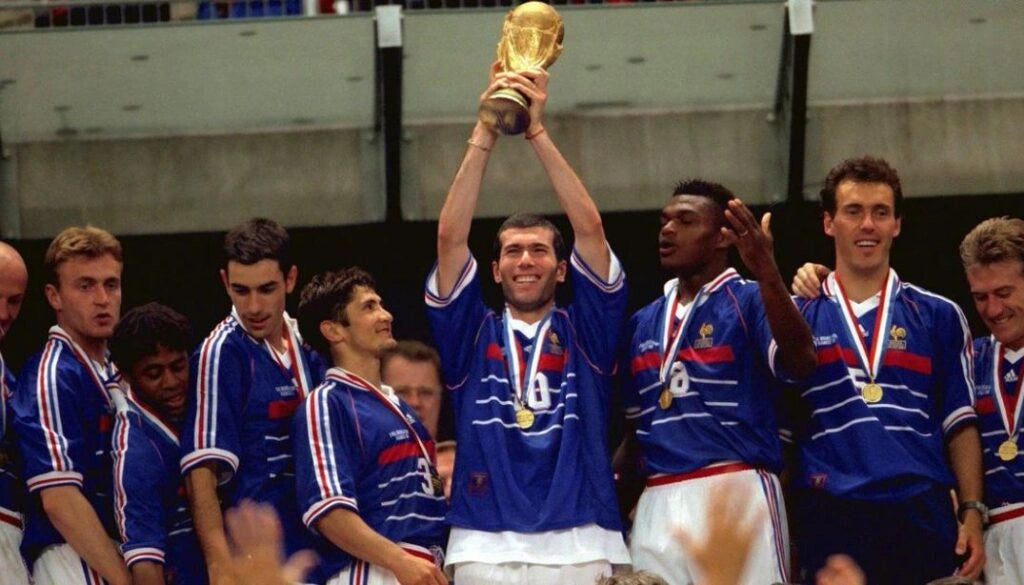
The blue jersey of the 1998 French team is probably the most important football jersey in the history of French football. In terms of design, it is remarkably simple: navy blue, golden V-neck, three golden Adidas stripes on the shoulders. No superfluous ornamentation. Its simplicity is what made it timeless: it does not belong to any particular graphic trend of the 90s, which allowed it to last through three decades without aging. Worn during the home victory on July 12, 1998, it instantly became a national memory object.
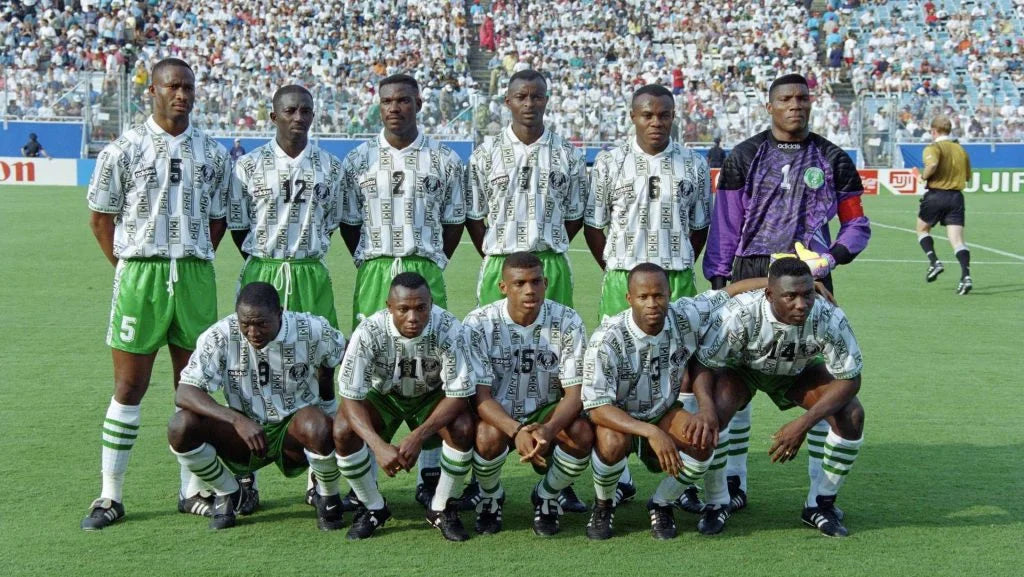
Nigeria 1994 is the visual shock of the American World Cup. Electric green, almost fluorescent, eagle feather pattern applied diagonally in a darker shade, a design totally foreign to the codes of European football at the time. The Super Eagles reached the round of 16 and their jersey exploded in popularity far beyond the African continent. It is now regularly cited as the best African jersey in history and has inspired many reissues up to 2026.
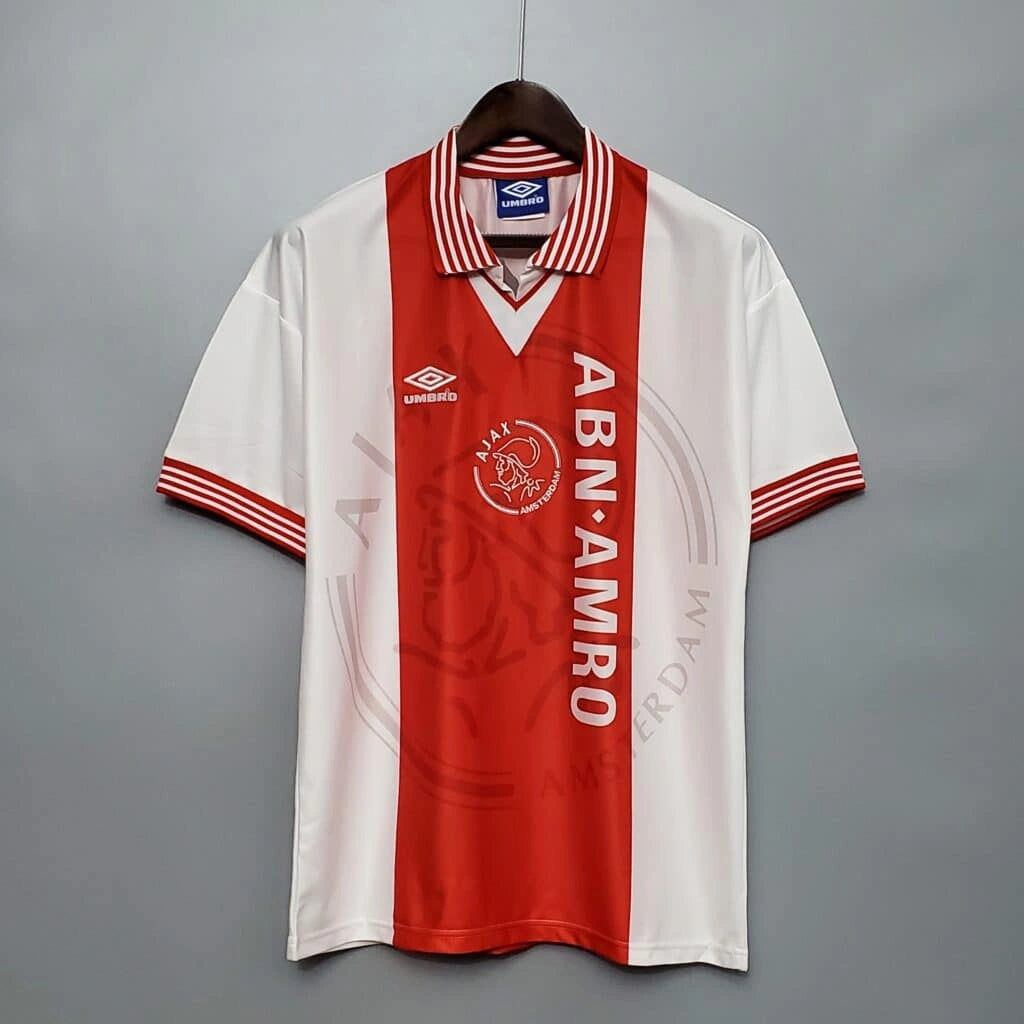
The Ajax jersey crowned European champion in 1995 with the generation of Davids, Kluivert, De Boer, Seedorf, Overmars is the archetype of the perfect 90s club jersey. Wide red and white vertical stripes, clean V-neck, discreet Umbro embroidery. A design that embodies the visual power of the Amsterdam club at its sporting peak. The generation of players trained at De Toekomst who conquered Europe in 1995 made this jersey a symbol of total football.
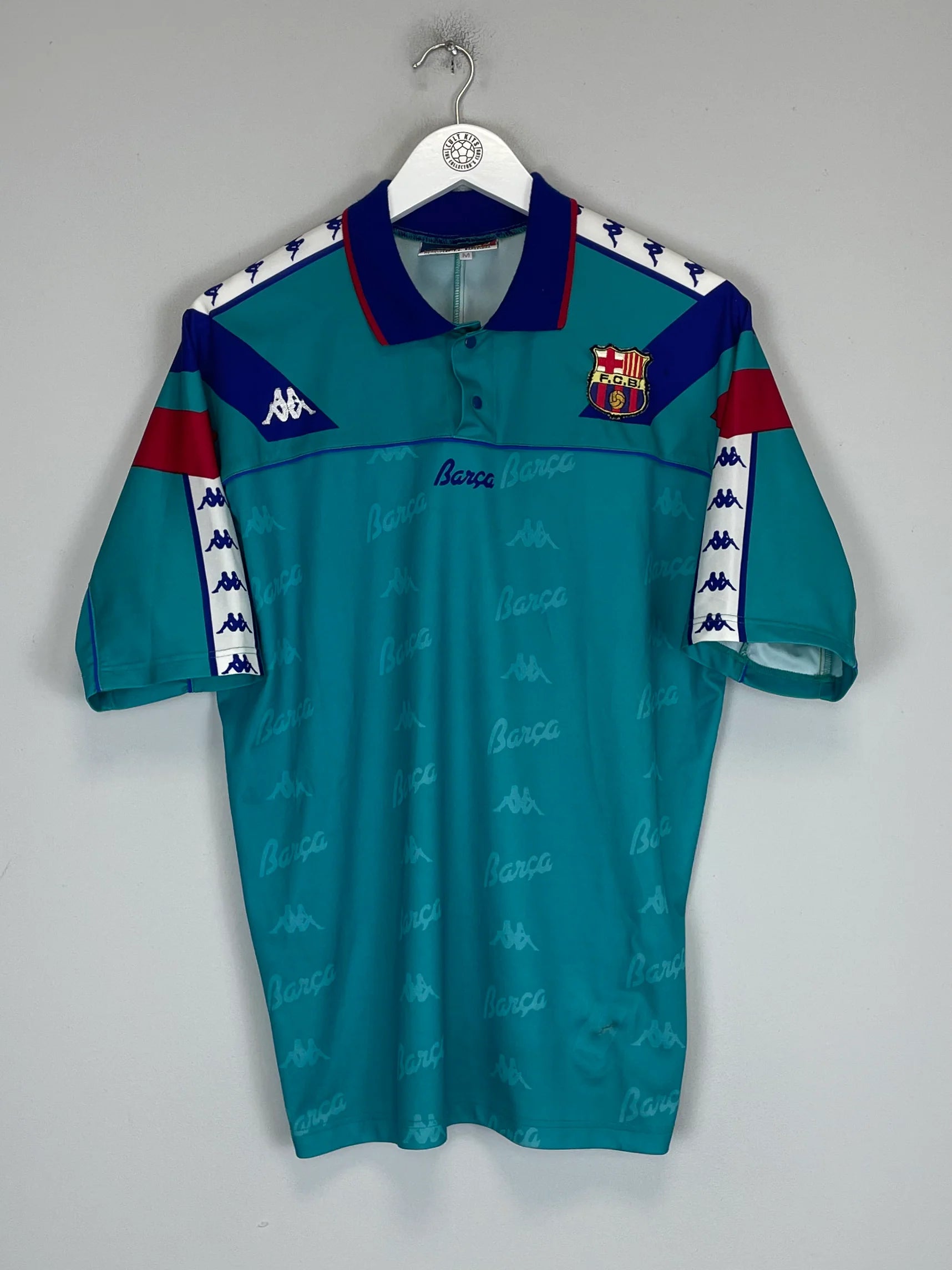
The FC Barcelona burgundy away jersey equipped by Kappa is one of the most recognizable jerseys of Johan Cruyff's Dream Team. Deep burgundy color, discreet Kappa logo on the chest, no sponsor on some versions, typical loose fit of the era. Worn during the club's first-ever Champions League at Wembley in 1992 against Sampdoria (1-0, Koeman's goal in the 112th minute), this jersey carries an emotional weight for Barça fans that goes far beyond its design.
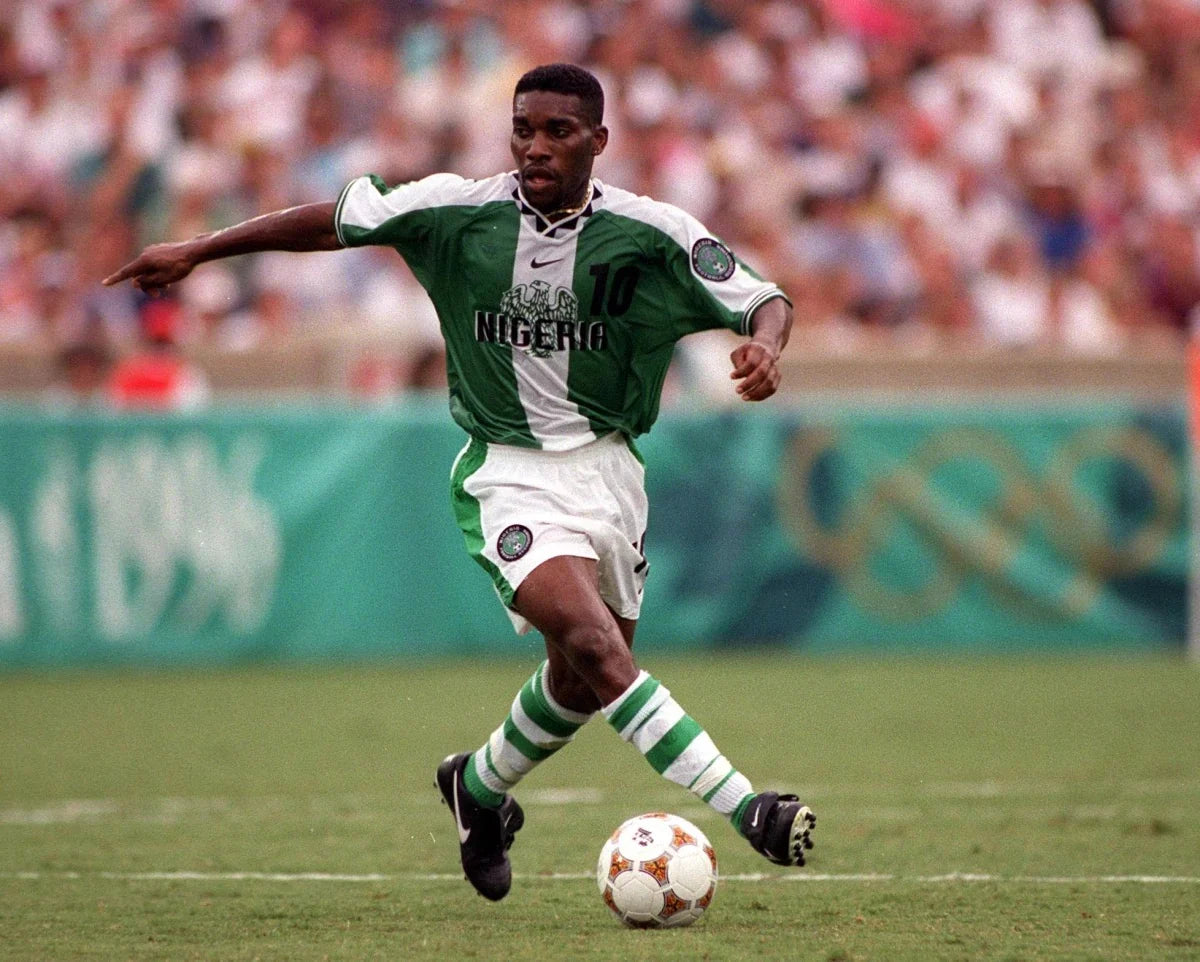
If Nigeria 1994 was a revolution, Nigeria 1996 at the Atlanta Olympics is a confirmation. Wearing gold and green in an even bolder design, the Super Eagles won the Olympic gold medal by beating Argentina in the semi-final and Brazil in the final. This double sporting achievement combined with a strong graphic design has made this jersey one of the most sought-after items by collectors of vintage African jerseys.
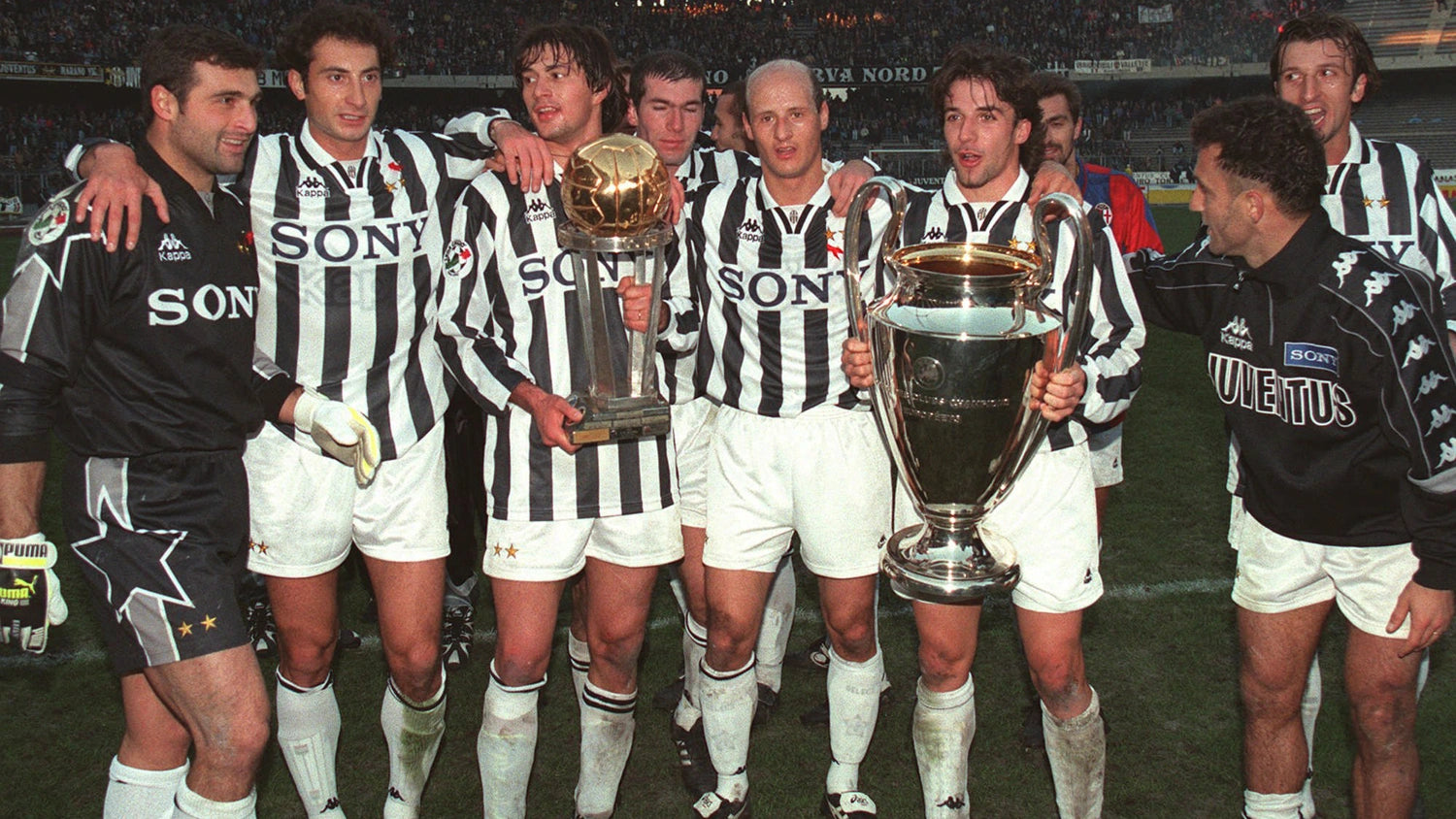
The black and white Juventus jersey from the Lippi years is among the most sober and effective of the decade. Wide vertical black and white stripes, discreet Siemens Mobile sponsor in white on black, Kappa logo on the chest. Worn during the 1996 Champions League title against Ajax (1-1, won on penalties), and during the two successive finals in 1997 and 1998, this jersey embodies the most glorious era in the modern history of the Vecchia Signora.
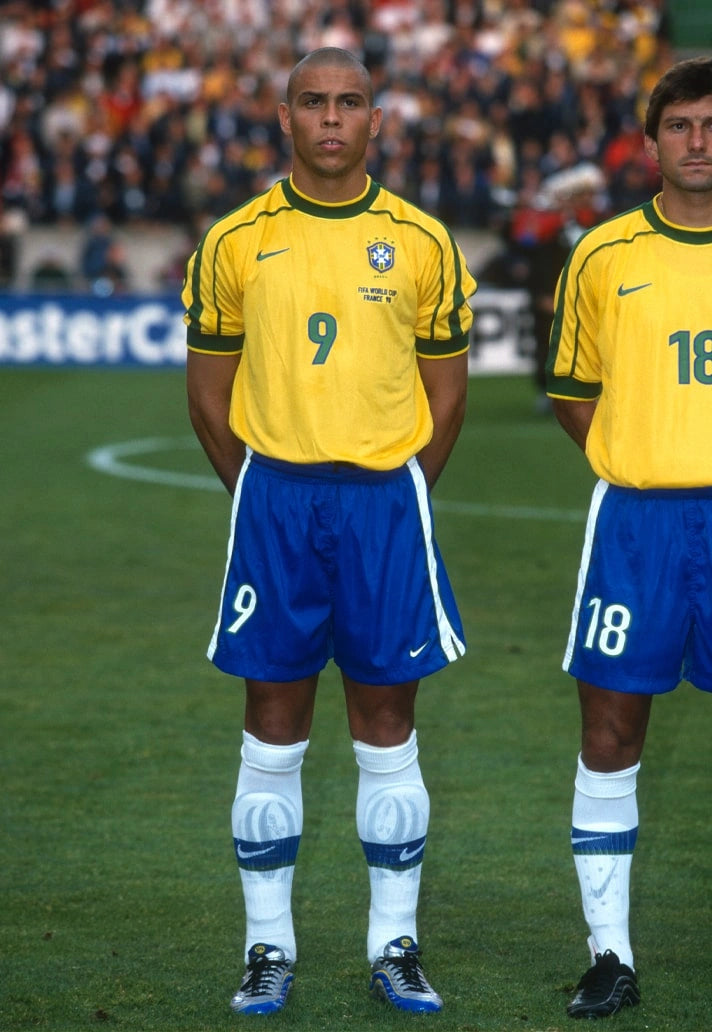
The first Nike-equipped Seleção jersey is Brazil’s from the 1998 Paris final. The canary yellow remains intact, the cut becomes more fitted, and the Nike swoosh replaces the previous Umbro logo. This jersey is inseparable from Ronaldo and the mysterious final against France (3-0), during which the Brazilian number 9 was not in his normal state. A jersey charged with a unique historical ambivalence.
What the 90s left as a legacy
The boom of Hardwood Classics reissues in basketball and vintage collections in football is no coincidence. The 90s produced designs strong enough to be updated thirty years later without needing modification. Nigeria 1994, Ajax 1995, Bordeaux Barça 1992: these are jerseys that haven’t just aged well. They have become better with time.
Discover our collection of official club jerseys at Elite Fanstore, including several clubs mentioned in this article.