


You wear an L in a T-shirt, an M in a shirt, and an XL in a sweatshirt. That’s normal, and it’s exactly why the letter on the label will never tell you what size jersey to order. The only information that doesn’t lie is the measurements in centimeters.
The same website’s catalog may offer three very different fits: fan, player, and retro. The difference between them is considerable. A retro-fit L is wider than a player-version S. Here’s how to decide in two minutes, using a tape measure, a jersey you already own, and the actual measurements in the store’s size charts.
Take a jersey that fits you well, lay it flat, and measure its chest width from one armhole seam to the other. Compare this figure with the “chest” column in the size chart for the fit you’re interested in.
In a supporter fit, an S measures 49 to 51 cm flat. In the player version, the same S drops to 43 to 46 cm. In retro, it goes up to 51 to 53 cm. Three identical letters, three different garments.
Why the letter on the label isn’t enough
A size is not a universal standard. It’s a convention specific to each manufacturer and, above all, to each fit. In football, three fits coexist on the same product pages, and they’re designed for different uses.
| Fit | Size S | Size M | Size L | Who it’s for |
|---|---|---|---|---|
| Supporter | 49 to 51 cm | 51 to 53 cm | 53 to 55 cm | Everyday wear, stands, comfort |
| Player | 43 to 46 cm | 46 to 48 cm | 48 to 51 cm | Practical, close-fitting look |
| Retro | 51 to 53 cm | 53 to 56 cm | 56 to 58 cm | Collection, classic straight fit |
Look at the first column: a retro S, at 51 to 53 cm, is wider than a player-version M, at 46 to 48 cm. L’s difference is almost a size and a half. So ordering “an L as usual” without checking the fit is like tossing a coin.
One last thing to understand: these figures are measurements taken flat. Lay the jersey on a table and measure its width, not its circumference. To get the garment’s chest circumference, you need to double the measurement. So a supporter S measuring 50 cm corresponds to a jersey with a 100 cm circumference.
The reference jersey method
This is the most reliable method, and it doesn’t require a scale or complicated calculations. Take a jersey, performance T-shirt, or polo shirt that fits you perfectly. You’ll use it as a reference. Three measurements are all you need.
Once you have these measurements, find the closest match in the chart for the fit you want. If your reference jersey is 52 cm wide and fits you perfectly, you’ll need an M in supporter fit, an XL in the player version, and an S in retro fit. The same comfort, three different letters.
Measure your chest with a soft tape measure under your arms, without pulling it tight. Then allow 6 to 12 cm of ease for a supporter fit, and 4 to 8 cm for a player version. Divide by two to compare with the chart column.
The three official size charts
Here are the complete measurements used in the store. The manufacturing tolerance is two to four centimeters, which is normal for mass-produced textiles: two jerseys in the same size may differ slightly.
| Size | Chest width | Jersey circumference | Length |
|---|---|---|---|
| S | 49 to 51 cm | 98 to 102 cm | 69 to 71 cm |
| M | 51 to 53 cm | 102 to 106 cm | 71 to 73 cm |
| L | 53 to 55 cm | 106 to 110 cm | 73 to 75 cm |
| XL | 55 to 57 cm | 110 to 114 cm | 75 to 77 cm |
| 2XL | 57 to 59 cm | 114 to 118 cm | 77 to 79 cm |
| 3XL | 59 to 61 cm | 118 to 122 cm | 79 to 81 cm |
| 4XL | 61 to 63 cm | 122 to 126 cm | 81 to 83 cm |
| Size | Chest width | Jersey circumference | Length |
|---|---|---|---|
| S | 43 to 46 cm | 86 to 92 cm | 66 to 69 cm |
| M | 46 to 48 cm | 92 to 96 cm | 69 to 71 cm |
| L | 48 to 51 cm | 96 to 102 cm | 71 to 74 cm |
| XL | 51 to 53 cm | 102 to 106 cm | 74 to 76 cm |
| 2XL | 53 to 56 cm | 106 to 112 cm | 76 to 79 cm |
| Size | Chest width | Jersey circumference | Length |
|---|---|---|---|
| S | 51 to 53 cm | 102 to 106 cm | 71 to 74 cm |
| M | 53 to 56 cm | 106 to 112 cm | 74 to 76 cm |
| L | 56 to 58 cm | 112 to 116 cm | 76 to 79 cm |
| XL | 58 to 61 cm | 116 to 122 cm | 79 to 81 cm |
| 2XL | 61 to 64 cm | 122 to 128 cm | 81 to 84 cm |
These three charts are also available together on the page the store’s three official size charts, which you can access at any time from a product page.
The selector: your fit, your chest, your size
First choose the fit, then enter your chest measurement taken under the arms. The result shows the recommended size and the measurements of the corresponding garment, so you can compare them with your reference jersey.
Jersey measuring 98 to 102 cm around the chest and 69 to 71 cm in length. If you often wear a layer underneath, the M remains comfortable.
Jersey measuring 102 to 106 cm around the chest and 71 to 73 cm in length. This is the most frequently ordered size in the catalog.
Jersey measuring 106 to 110 cm around the chest and 73 to 75 cm in length. A good balance between a comfortable fit and a sleek silhouette.
Jersey measuring 110 to 114 cm around the chest and 75 to 77 cm in length. Also check the length if you are over 1.90 m tall.
Jersey measuring 114 to 118 cm around the chest and 77 to 79 cm in length. Sizes 3XL and 4XL are available in this fit as well.
Jersey measuring 92 to 96 cm around the chest and 69 to 71 cm in length. Size down to S only if you want a very close-fitting look.
Jersey measuring 96 to 102 cm around the chest and 71 to 74 cm in length. The slim fit is tighter around the armholes than the supporter version.
Jersey measuring 102 to 106 cm around the chest and 74 to 76 cm in length. Choose this size even if you wear L in the supporter fit.
Jersey measuring 106 to 112 cm around the chest and 76 to 79 cm in length. This is the largest size available in this fit.
2XL tops out at 112 cm around the chest. If your chest measures over 110 cm, the XL or 2XL supporter fit will be much more comfortable.
Jersey measuring 102 to 106 cm around the chest and 71 to 74 cm in length. The straight cut already gives a relaxed look on this body type.
The S measures 102 to 106 cm around the chest, while the M measures 106 to 112 cm. Choose the S for a sleek silhouette, or the M for a relaxed vintage look.
Jersey measuring 106 to 112 cm around the chest and 74 to 76 cm in length. Please note that reissues are often shorter than current jerseys.
Jersey with a chest measurement of 112 to 116 cm and a length of 76 to 79 cm. The thicker fabric stretches very little with wear.
Jersey with a chest measurement of 116 to 122 cm and a length of 79 to 81 cm. The 2XL is available and goes up to a 128 cm chest measurement.
Select a fit and chest measurement to see your size.
Three jerseys, three different fits to compare.
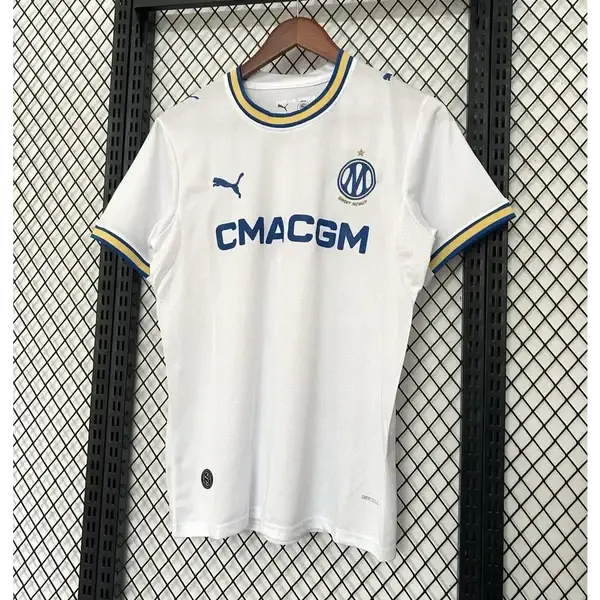
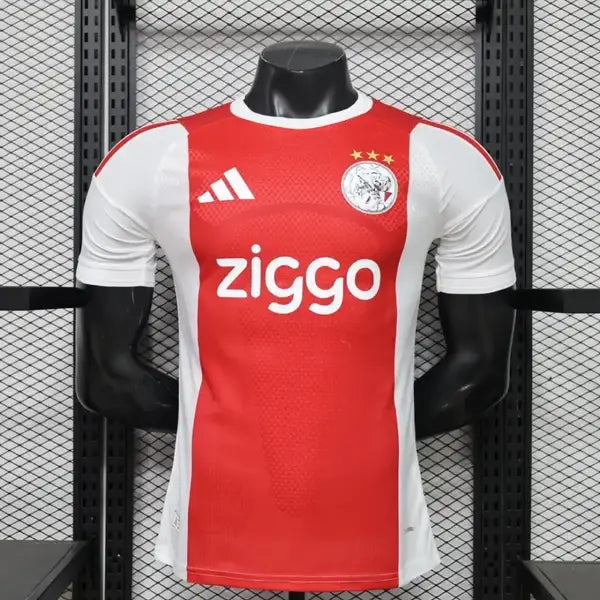
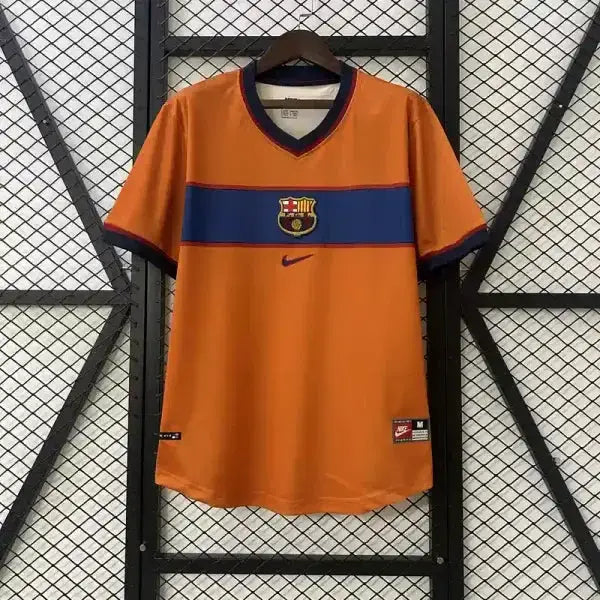
Between two sizes, how to choose
Sometimes your measurements fall right between two rows in the chart. In that case, three factors can help you decide, and they always outweigh your general impression.
- L’use: for playing, choose the smaller of the two sizes. For the stands or around town, choose the larger one.
- Layer underneath: if you wear a base layer or T-shirt, go up a size, especially in the player version.
- Shoulders: if you have broad shoulders for an average chest measurement, go up a size. The armholes will feel tight before the chest does.
One last useful guideline: length. Above 1.85 m, jersey length becomes just as important as width. An XL fan jersey measures 75 to 77 cm from the top of the shoulder to the hem, while an L measures only 73 to 75 cm. Two centimeters go unnoticed; four are visible as soon as you raise your arms.
Mistakes that throw off your measurements
Never measure a jersey by stretching it flat. Stretchy fabric can easily stretch by several centimeters, and you’ll get a measurement that doesn’t match any line in the chart.
- Measuring over a sweater. Measure your chest over a thin T-shirt, or directly against your skin.
- Expanding your chest while measuring. Breathe normally, with your arms at your sides.
- Comparing it with a garment from another category. A sweatshirt and a performance jersey have different fits and are made of different materials.
- Ignoring the fit. This is the most common mistake: the same letter can describe three very different fits.
- Counting on shrinkage. Polyester jerseys washed at 30 degrees hardly shrink, unlike cotton.
If you’ve ordered one that’s too big despite everything, all is not lost: we explain the realistic solutions and their limitations in our article about the oversized jersey. For a broader overview, our guide to what size jersey to choose complements this page.
Frequently asked questions
Lay it flat without stretching it, and measure from one armhole seam to the other. Compare this measurement directly with the chest column in the size chart. Multiply it by two to get the garment’s circumference.
Yes, considerably. A player version S measures 43 to 46 cm across when laid flat, compared with 49 to 51 cm for a fan fit. As a rule, go one size up from your usual size.
Often one size smaller than your usual fan fit. Reissues have a wider, straight cut: a retro S measures 51 to 53 cm across when laid flat, which is more than a player version M.
Very little when polyester is washed at 30 degrees on a gentle cycle. Don’t count on shrinkage to make an oversized jersey fit, and avoid the dryer, which can damage the lettering and numbering.
This is the normal manufacturing tolerance for mass-produced textiles. Two jerseys in the same size may differ slightly. If your measurement falls near the boundary between sizes, this tolerance is a good reason to size up.
Two minutes, a tape measure, zero returns
Knowing your jersey size isn’t a guessing game. You just need to accept that the letter means nothing until you know which fit it refers to, then compare centimeters with centimeters.
Keep the measurements of a reference jersey somewhere: chest width, length, shoulder width. You’ll have them handy for every order, and you’ll be able to buy a fit you’ve never tried without taking any risks.